What Is a Certified Nurse Educator and Why It Matters
A certified nurse educator is an experienced nursing professional who specializes in teaching, training, and guiding the next generation of nurses. Unlike general nursing roles that focus primarily on patient care, nurse educators work in academic institutions, hospitals, and training centers where their main responsibility is to prepare students and junior nurses for real-world healthcare environments. This role combines clinical expertise with teaching ability, making it one of the most important positions in the healthcare education system.
The importance of certified nurse educators has grown significantly due to the increasing demand for qualified healthcare professionals worldwide. As healthcare systems expand and patient care becomes more complex, the need for well-trained nurses continues to rise. Nurse educators ensure that nursing students not only understand theoretical knowledge but also develop practical skills, critical thinking, and ethical decision-making abilities. Their certification validates their teaching competence and clinical experience, making them trusted professionals in nursing education.
Role and Responsibilities of a Certified Nurse Educator
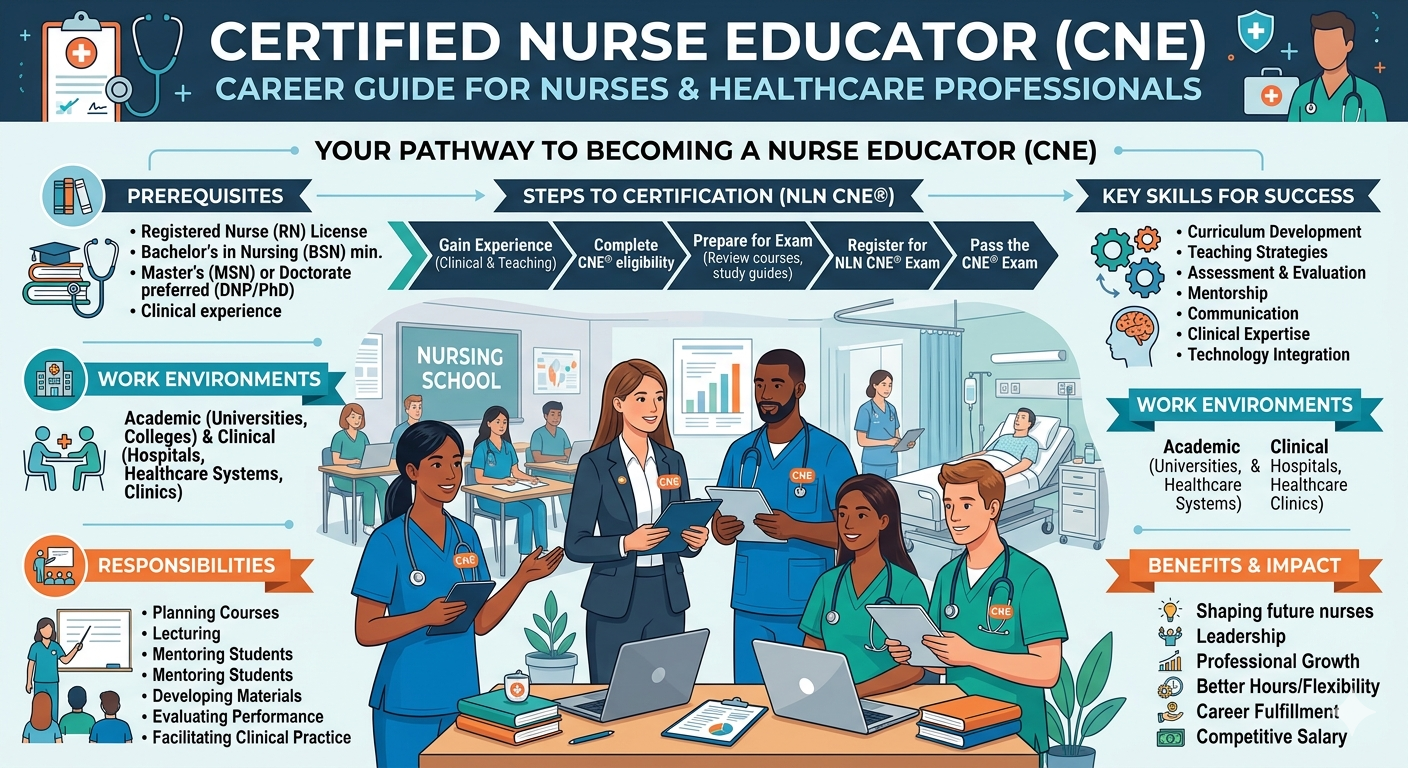
The daily responsibilities of a certified nurse educator go beyond traditional classroom teaching. These professionals design lesson plans, develop nursing curricula, and deliver lectures on various healthcare topics such as anatomy, pharmacology, patient care, and clinical procedures. They also supervise students during clinical rotations in hospitals, ensuring that they apply theoretical knowledge in real-life situations.
In addition to teaching, nurse educators assess student performance through exams, practical evaluations, and skill demonstrations. They provide feedback, mentorship, and guidance to help students improve. Many nurse educators also participate in research activities to improve nursing education methods and healthcare practices. Their role is a combination of educator, mentor, researcher, and clinical advisor, making it a highly dynamic and impactful profession.
Educational Path to Becoming a Certified Nurse Educator
To become a certified nurse educator, individuals must first complete a formal nursing education, such as a Bachelor of Science in Nursing (BSN). After that, many professionals pursue advanced degrees like a Master of Science in Nursing (MSN) or even a Doctor of Nursing Practice (DNP) with a focus on education.
Once educational requirements are met, aspiring nurse educators typically gain clinical experience in healthcare settings. This hands-on experience is essential because it provides real-world knowledge that is later passed on to students. After meeting academic and experience requirements, candidates can pursue certification programs such as the Certified Nurse Educator (CNE) credential. This certification validates their teaching skills and subject expertise, making them eligible for academic and training positions in nursing schools and healthcare institutions.
Importance of Certification in Nursing Education
The certification of a certified nurse educator plays a crucial role in establishing credibility and professional recognition. It ensures that the educator has met standardized requirements in both clinical practice and teaching methodology. This certification is often required by universities and healthcare training institutions when hiring nursing faculty.
Certification also helps maintain high-quality education standards in nursing programs. It ensures that students receive accurate, up-to-date, and evidence-based knowledge from qualified instructors. Additionally, certified educators are better equipped to use modern teaching tools, simulation labs, and digital learning platforms. This improves the overall quality of nursing education and prepares students more effectively for real-world healthcare challenges.
Skills Required for a Certified Nurse Educator
A successful certified nurse educator must possess a combination of clinical expertise, teaching ability, and interpersonal skills. Strong communication skills are essential because educators must explain complex medical concepts in a clear and understandable way. Patience and empathy are also important, as students often require guidance and repeated instruction to master nursing skills.
Critical thinking and problem-solving skills help educators design effective lesson plans and handle classroom challenges. Leadership skills are also important because nurse educators often mentor large groups of students and coordinate with other faculty members. Additionally, familiarity with modern educational technology, such as simulation tools and online learning platforms, is becoming increasingly important in today’s digital learning environment.
Career Opportunities for Certified Nurse Educator
The career opportunities for a certified nurse educator are diverse and expanding. Most professionals work in nursing schools, colleges, and universities where they teach undergraduate and graduate nursing programs. Others work in hospitals as clinical educators, training newly hired nurses and improving staff performance.
Some nurse educators also work in research institutions, healthcare organizations, and government agencies, contributing to policy development and healthcare training programs. With experience, they may advance to leadership positions such as department head, dean of nursing, or curriculum director. The growing demand for healthcare professionals worldwide ensures that nurse educators will continue to have strong job prospects in the future.
Salary and Job Outlook for Nurse Educators
The salary of a certified nurse educator varies depending on location, experience, and educational qualifications. Generally, nurse educators earn competitive salaries due to their advanced skills and academic responsibilities. Those working in universities or senior positions tend to earn higher salaries compared to entry-level educators.
The job outlook for this profession is very positive. As the global healthcare industry expands, there is a continuous need for qualified nurses, which directly increases the demand for nurse educators. Many countries are already facing a shortage of nursing faculty, making this career path both stable and rewarding. In addition to financial benefits, the profession also offers job security and opportunities for professional growth.
Challenges Faced by Certified Nurse Educators
Despite its rewards, the role of a certified nurse educator comes with several challenges. One of the main challenges is balancing teaching responsibilities with clinical expertise. Educators must stay updated with the latest medical advancements while also managing classroom duties and administrative work.
Another challenge is handling diverse student learning abilities. Some students may grasp concepts quickly, while others require additional support and guidance. Managing this diversity requires patience and adaptability. Additionally, nurse educators often face workload pressures, including grading assignments, preparing lectures, and conducting research. Despite these challenges, many professionals find the role highly fulfilling due to its impact on future healthcare providers.
Technology in Modern Nursing Education
Technology plays an increasingly important role in the work of a certified nurse educator. Modern nursing education uses simulation labs, virtual reality (VR), and online learning platforms to enhance student learning experiences. These tools allow students to practice clinical skills in a safe and controlled environment before working with real patients.
Digital learning systems also make it easier for educators to share resources, track student progress, and conduct assessments. Online classes and hybrid learning models have become more common, especially after global shifts in education systems. Technology not only improves teaching efficiency but also prepares students for modern healthcare environments where digital tools are widely used.
Future of Certified Nurse Educator Profession
The future of the certified nurse educator profession is highly promising. As healthcare systems continue to evolve, the need for highly skilled nurses will increase, which directly boosts the demand for qualified educators. Emerging trends such as telehealth, AI in healthcare, and advanced medical technologies will also require updated training programs, creating new opportunities for nurse educators.
In the future, nurse educators are expected to play a more active role in curriculum development, digital education, and global healthcare training initiatives. Continuous professional development will be essential to keep up with changing medical standards and technologies. Overall, this profession will remain a vital part of the healthcare system for many years to come.
Final Thoughts on Certified Nurse Educator Career
The certified nurse educator career is both meaningful and impactful, offering professionals the opportunity to shape the future of healthcare. By combining clinical experience with teaching expertise, nurse educators play a key role in preparing competent and confident nurses.
This career not only provides job stability and competitive salaries but also offers personal satisfaction through teaching and mentoring. As healthcare continues to grow globally, the importance of nurse educators will only increase. For nurses looking to transition into education, this path offers a rewarding opportunity to make a lasting difference in the healthcare industry.