
Introduction to Fortune Cookies and Their Popularity in
Fortune cookies are little, crisp biscuits with a tiny sheet of paper inside with a brief message or “fortune.” They are most often found on the menus of Chinese restaurants, especially in the United States and other Western countries. Many people appreciate them at the end of a meal not just because they are delicious but also because of the exciting surprise within.
Although closely linked with Chinese food, fortune cookies are not of Chinese heritage. Many people are surprised, especially when they first see them in Chinese restaurants. The topic “where did the fortune cookie come from” results in an interesting blend of cultural history, migration, adaption and marketing influence across countries and communities.
To learn the real story of fortune cookies, we need to look beyond the restaurant lore and see how food changes as cultures collide and mingle.
Chinese Origin – The Usual Myth
One of the biggest misconceptions regarding fortune cookies is that they are Chinese. Many people believe they are a classic Chinese dessert, because they are served at Chinese restaurants and are commonly eaten with Chinese dishes. But there is no historical evidence to support this.
In fact, fortune cookies as we know them today were not well known in China in their early beginnings. The popular variation found in current eateries is more related to Chinese-American populations than traditional Chinese cuisine. This confusion is a great example of how cultural foods can evolve differently when they are away from their origins.
The link to Chinese cuisine is largely a matter of cultural branding and the appearance of restaurants, not any actual historical history.
The Japanese History of Fortune-Like Cookies
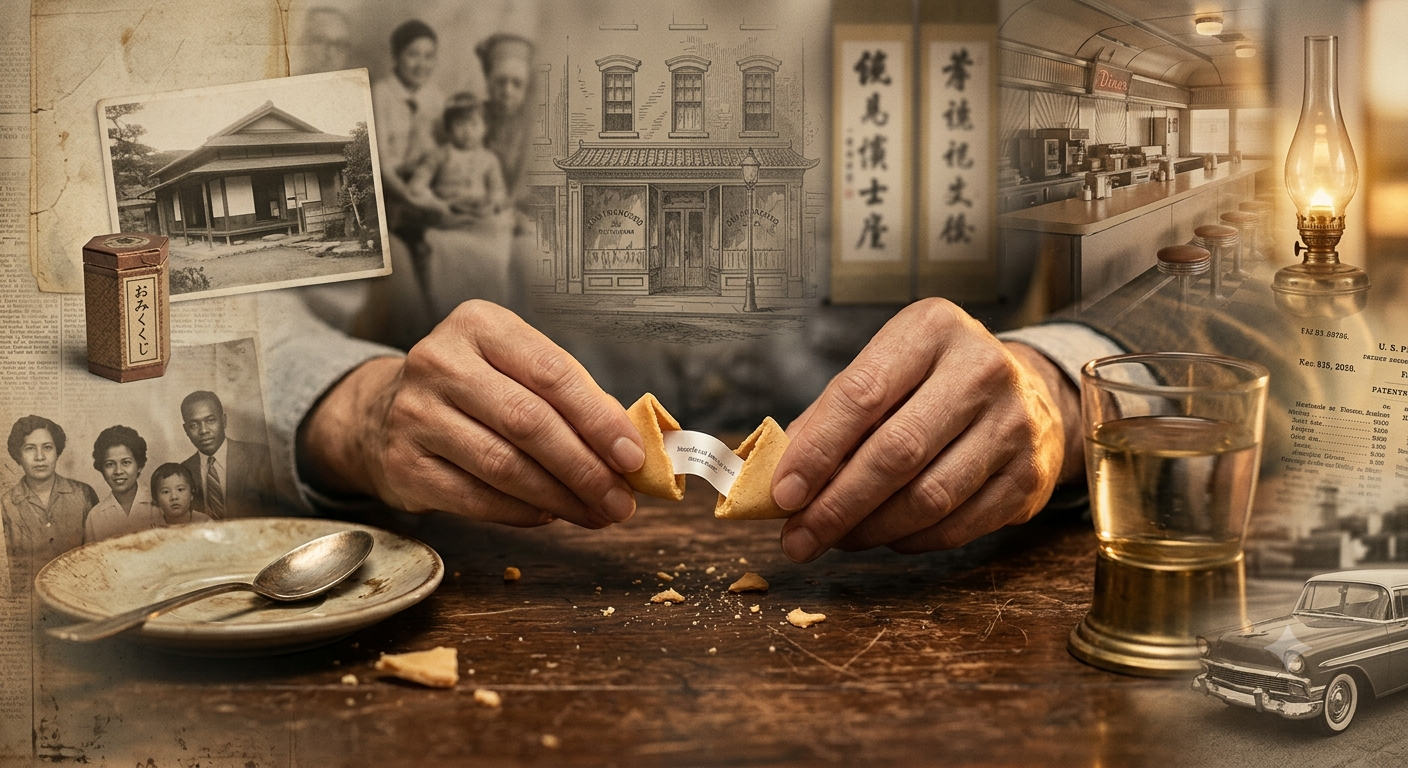
Many food historians say that the oldest version of fortune cookies did not come from China, but rather from Japan. There is a traditional Japanese cracker known as “tsujiura senbei.” It is prepared from similar ingredients and frequently includes a small paper of fortunes within. These sweets are usually larger, darker in colour, and flavoured differently than the modern fortune cookie.
Some sources indicate these crackers with fortunes inside were brought to the United States by Japanese immigrants in the late 19th and early 20th centuries. These early versions are said to have helped create the contemporary fortune cookie.
But even the Japanese version is very different from what we know today. It’s less sweet and has a thicker, more rustic look than the lighter, sugary cookie you get at restaurants.
Chinese-American Restaurants: The Role of
The modern fortune cookie became popular in Chinese-American eateries, notably on the West Coast of the United States. In the early 1900s , Chinese immigrants adapted their cooking to American tastes . This adaptation led to what we call ” American Chinese food . “
It involved cultural adaptation like fortune biscuits. Restaurants have placed them at the conclusion of a meal for a pleasant, interactive dessert. Over the years, customers came to associate them closely with Chinese food, albeit their roots were more complicated.
This change illustrates how immigrant communities frequently adapt culinary traditions to new settings, inventing totally new cultural icons in the process.
The Rise of Fortune Cookies in California
California was instrumental in popularising fortune cookies. Cities such as San Francisco and Los Angeles had big Asian immigrant populations and Chinese-American restaurants grew more prevalent.
From the early to mid-20th century, these eateries used fortune cookies as a trademark item. They were affordable to create, easy to distribute, and gave diners a memorable experience. Fortune cookies became famous as Chinese-American food spread throughout the United States.
They became the standard in Chinese restaurants across the country, despite not being a part of traditional Chinese culinary culture.
Debate On Origin Japanese VS Chinese
For a long time historians have debated whether fortune cookies originated in Japan or were invented in the United States by Chinese immigrants. There is some evidence for the Japanese influence through tsujiura senbei . Other versions point to early Chinese-American bakers who came up with the present variant independently.
The reality is likely somewhere in the middle. The fortune cookie grew out of a cultural interchange between Japanese immigrants, Chinese immigrants, and American food entrepreneurs. It doesn’t seem to have a single genesis but looks to be a fusion of different influences that have merged over time.
This makes fortune cookies a one of a kind example of fusion cuisine culture.
The Modern Business of Fortune Cookies
Today, fortune cookies are mass-produced in factories, not hand-made in eateries. Thanks to mass production, millions of cookies are sent to restaurants, supermarkets and events all over the world.
Today many fortune cookie makers will create unique fortunes for businesses, ranging from promotional messages and jokes to inspiring quotations and even lottery-style forecasts. This commercialisation has made fortune cookies a food item and marketing tool.
They are mass-produced, but they still represent Chinese dining in the West.
Symbolism and World View in Culture
Fortune cookies have transcended the realm of dessert to become cultural icons. For many people outside Asia, they are mystery, wisdom and amusing predictions about the future. They’re also just neat. The little piece of paper that is inside usually has some message on it that is inspiring or hilarious.
Interestingly, fortune cakes are not frequent at traditional restaurants in China. Many tourists are surprised by this, as they come expecting to see them as part of traditional Chinese food.
This contrast underscores how cultural symbols can evolve differently based on region and marketing.
Why Do People Keep Asking “Where Did the Fortune Cookie Come From?”
“Where did the fortune cookie come from” is still a common question because the cookie is so recognisable, but so historically misunderstood. Many are astonished to hear that something they connect with Chinese culture has a more nuanced, international history.
The intrigue arises also from the mystery inside the cookie itself, The fortunes are random and often philosophical, so it is inevitable that individuals think more carefully about their origin and significance.
This sustained curiosity keeps the issue in search trends and in cultural conversation.
Final Thoughts on the Creation of Fortune Cookies
The history of fortune cookies is not related to a specific culture or period in history. Instead, it is the product of a combination of Japanese inspirations, Chinese-American adaption and American commercialisation over time.
While they are often linked with Chinese restaurants today, their true history is far more varied and multicultural. Fortune cookies are a symbol of how food can cross borders and become something totally different in the process.
Knowing where they came from, we can enjoy not only the cookie itself but the cultural interaction that brought it to this level as a world emblem of inquiry and fun.